- August 21,2026
- 2 months ago
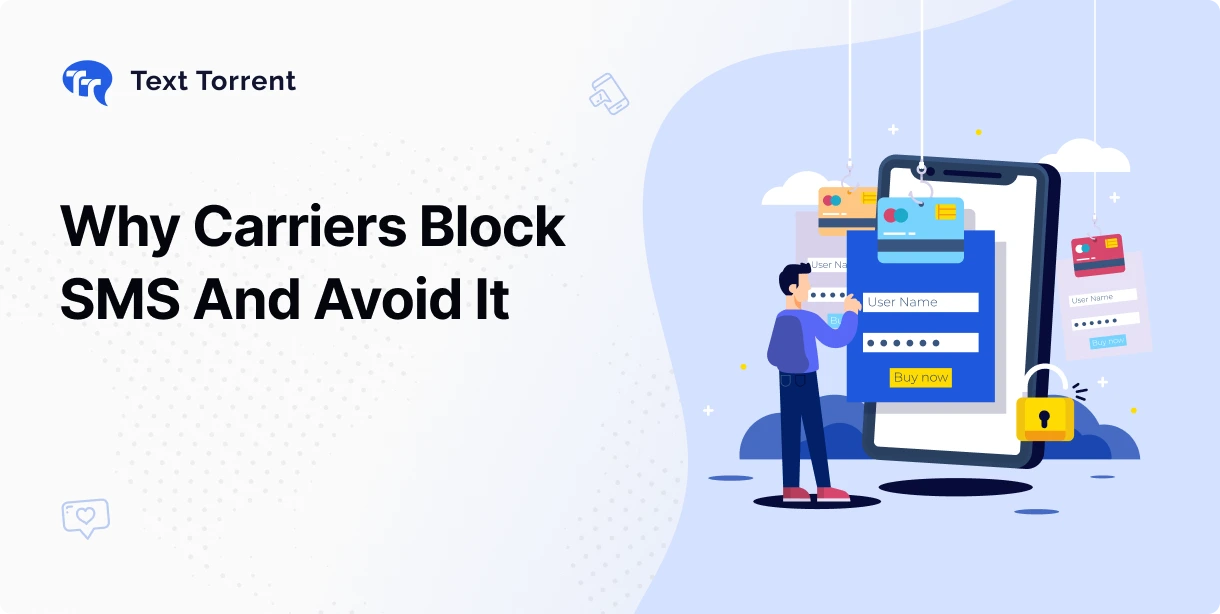
Bulk SMS remains one of the most dependable ways to reach customers — until suddenly it doesn’t. Messages stop going through, campaigns stall, costs
climb, and the dashboard offers no clear explanation.
Many teams assume carrier blocking happens randomly. It doesn’t.
Bulk SMS gets blocked for clear technical and policy reasons. Once you understand how carriers evaluate messaging traffic, most blocking problems become
preventable.
Let’s break down why carriers block bulk SMS, what signals they actually monitor, and how you can avoid deliverability issues before they damage your
campaigns.
Carriers don’t manually review each message. Instead, they use automated filtering systems designed to protect their networks and subscribers from spam or
abusive traffic.
These systems analyze patterns over time, not just individual messages.
Typical signals carriers monitor include:
Sender behavior and traffic consistency
Message volume patterns
Content similarities across campaigns
Recipient engagement signals
Sender identity and campaign registration data
Blocking usually happens when traffic crosses certain risk thresholds, not because of a single mistake.
Understanding these thresholds is the first step toward maintaining stable SMS delivery.
When registration is incomplete or inaccurate, problems typically appear gradually.
Messages may initially deliver normally. Filtering slowly increases. Eventually large-scale blocking begins.
Common mistakes include:
Using long codes without brand registration
Registering vague campaign descriptions
Sending messages that don’t match the registered use case
Reusing the same registration across unrelated campaigns
Ignoring proper registration gradually lowers your sender trust score. Delivery rates drop over time until traffic becomes throttled or blocked entirely.
Today, A2P registration is not optional — it is the baseline requirement for business messaging.
If you want a deeper breakdown of registration-related filtering, review the most common business SMS blocking reasons before launching high-volume campaigns.
Teams often create this problem by uploading large contact lists and blasting them immediately, increasing volume faster than engagement history supports,
or sending messages from numbers that were never warmed up.
Carriers prefer gradual and predictable sending patterns. Successful SMS programs increase traffic slowly and maintain consistent sending behavior.
These volume patterns are closely tied to how SMS spam filters work in the US, especially when new numbers scale too quickly.
Bulk SMS should scale like infrastructure, not like an uncontrolled email blast.
Risk increases when messages contain highly repetitive wording, aggressive calls-to-action, suspicious links, or content that does not match the registered
campaign use case.
Common red flags include:
Repeated short promotional messages
Overly aggressive sales language
Frequent use of URL shorteners
Rotating or newly created domains
Message content that doesn’t match the registered campaign purpose
At scale, these patterns become extremely visible to filtering systems.
The result is inconsistent delivery. Some recipients receive the message, while others never see it, making troubleshooting difficult.
Keeping message content clear, varied, and aligned with your registered use case helps reduce filtering risk.
4. Poor List Quality and Negative Recipient Signals
Carriers also monitor how recipients react to messages.
Negative signals include:
High opt-out rates
Messages sent to invalid or recycled numbers
User complaints reported to carriers
Low engagement or response rates
Many businesses focus heavily on sending campaigns but overlook list quality.
Common mistakes include using outdated or purchased contact lists, failing to process opt-outs quickly, and continuing campaigns despite rising unsubscribe rates.
When list quality drops, sender trust scores decline quietly in the background. Even compliant messages may start failing delivery.
To avoid complaint-driven filtering, every sender should follow a practical bulk SMS compliance checklist before sending at
scale. Ultimately, delivery depends heavily on who you message, not just what you send.
5. Shared Number Reputation Problems
When multiple campaigns share the same sending numbers, their reputations become linked.
This often happens when different brands reuse the same number, when unrelated campaigns share a sender ID, or when one risky campaign runs alongside legitimate messaging traffic.
From a carrier’s perspective, mixed traffic patterns increase uncertainty and complaint risk.
As a result, filtering can expand across all campaigns using those shared numbers, even the compliant ones.
6. Missing Operational Controls
Reliable SMS operations require strong sending controls.
Platforms without proper safeguards make it easy for teams to accidentally trigger carrier filters.
Important operational controls include:
Send-rate limits per campaign
Automatic opt-out enforcement
Traffic pacing systems
Carrier-level delivery monitoring
Campaign approval workflows
Without these controls, mistakes accumulate quickly and deliverability problems escalate before teams notice.
Many blocking issues start with preventable execution errors, which is why teams should understand the common bulk SMS mistakes that trigger blocking.
How to Reduce Carrier Blocking Over Time
Avoiding carrier blocking is not about quick fixes. It requires building a reliable messaging system.
Successful teams consistently:
Register brands and campaigns correctly
Warm up sending numbers gradually
Maintain clean permission-based contact lists
Align message content with registered campaign use cases
Continuously monitor delivery and opt-out trends
These practices gradually build trust with carriers and stabilize delivery rates.
The Hidden Pattern Behind SMS Blocking
Blocking often feels sudden because the warning signals accumulate quietly beneath the surface.
By the time messages stop delivering, carrier systems have already detected repeated risk patterns.
Teams that maintain reliable SMS programs do not scramble to fix problems after delivery drops. They design messaging systems that never appear
suspicious in the first place.
That is the difference between simply sending bulk SMS and operating a reliable messaging infrastructure.
If SMS is critical to your business, treat deliverability like an engineering problem rather than just another marketing channel.