- August 21,2026
- 2 months ago
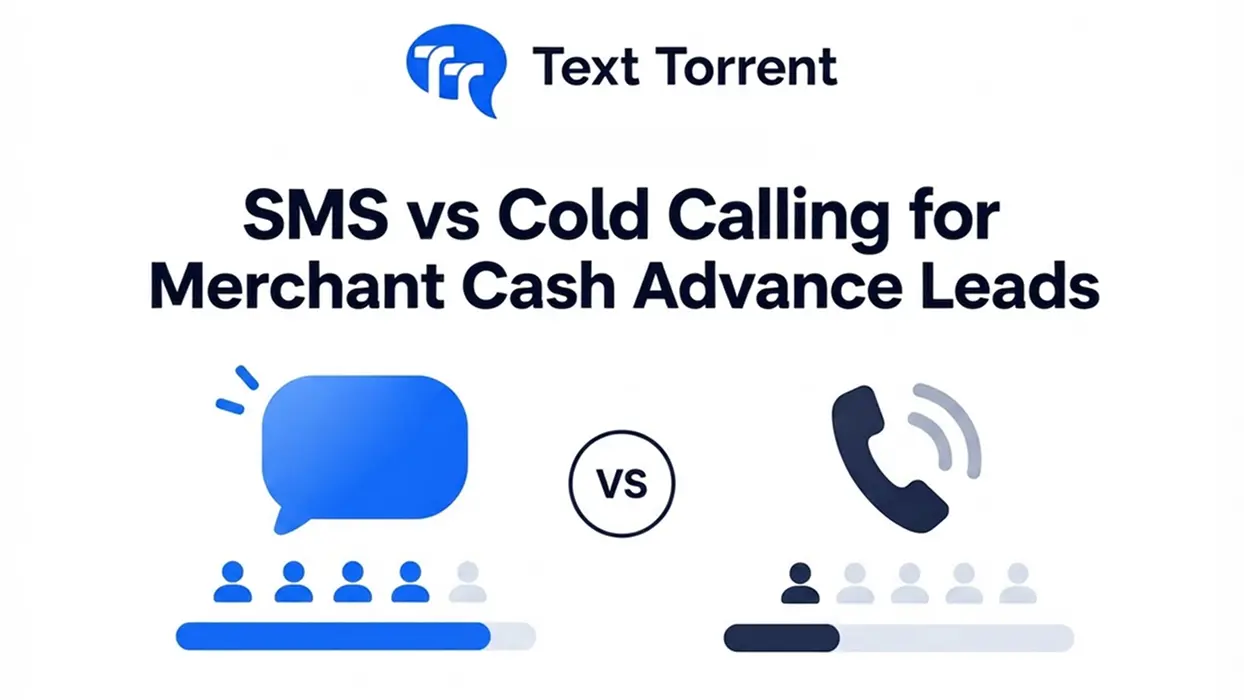
Speed wins deals in the merchant cash advance industry.
Most MCA leads are not exclusive. A business owner who submits an application today may receive calls, emails, and text messages from multiple brokers and funders within minutes. The first company to establish contact often gains a significant advantage.
This creates a challenge for MCA companies.
Traditional outreach methods frequently fail to keep pace with modern lead response expectations. Cold calls go unanswered. Emails sit unread. Sales teams struggle to follow up consistently as lead volume increases.
SMS solves a different problem than most marketing channels.
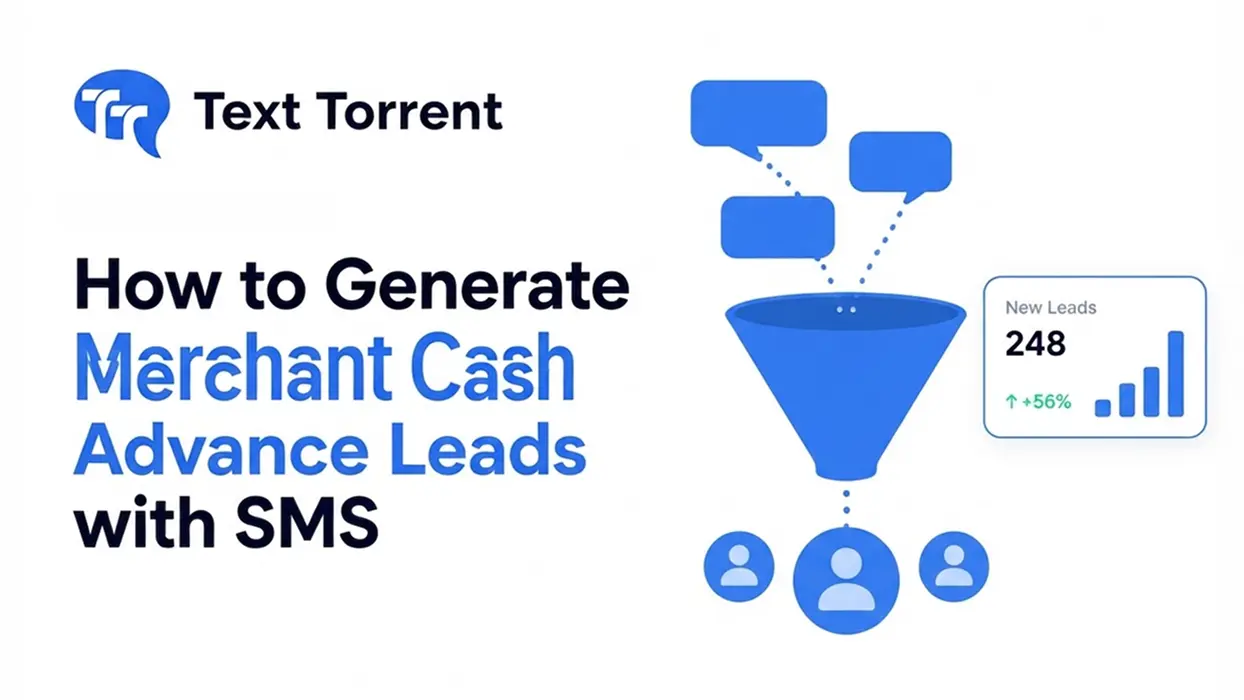
Instead of generating awareness, it helps MCA companies reach prospects quickly, maintain engagement throughout the underwriting process, and reduce delays that prevent deals from funding.
However, success requires more than simply sending more messages.
Many MCA companies experience filtering issues, poor response rates, compliance concerns, and declining performance because they treat SMS as a mass-blasting tool rather than a structured communication channel.
The companies generating the best results use SMS strategically throughout the entire funding lifecycle.
Merchant cash advance transactions often happen under time pressure.
Business owners typically seek funding because they need:
Working capital
Inventory financing
Payroll support
Equipment purchases
Cash-flow assistance
Seasonal growth funding
The need is immediate.
Response speed becomes critical.
A lead that waits several hours for contact is often far less valuable than a lead contacted within minutes.
The Communication Gap
Many MCA companies invest heavily in lead generation but lose opportunities during follow-up.
Common issues include:
Delayed responses
Missed calls
Unanswered emails
Inconsistent outreach
SMS helps close this gap by creating an immediate communication channel.
Many companies view texting only as a prospecting tool.
That approach leaves significant value untapped.
SMS can improve multiple stages of the funding process.
Initial Lead Response
Speed-to-lead remains one of the strongest predictors of conversion.
A text message sent shortly after inquiry submission often reaches prospects before competitors establish meaningful contact.
Application Collection
Many deals stall because required documents are not submitted promptly.
SMS reminders help keep applicants moving through the process.
Underwriting Updates
Applicants frequently want status updates.
Rather than forcing customers to call, SMS provides proactive communication.
Funding Coordination
Final funding steps often require immediate action.
Text messages reduce delays and improve responsiveness.
The biggest mistake MCA companies make is treating SMS like email.
Large message blasts are sent to broad audiences with little consideration for timing, relevance, or recipient intent.
The result is predictable:
Lower response rates
Higher opt-outs
More complaints
Increased filtering
What Businesses Get Wrong
Many organizations focus on message volume instead of message relevance.
Sending more messages rarely fixes poor communication strategy.
Better targeting almost always produces better results.
In the MCA industry, lead response speed directly affects revenue.
Consider two scenarios.
Company A
Contacts a prospect:
Four hours after inquiry submission
Company B
Contacts the same prospect:
Three minutes after inquiry submission
The second company has a substantial advantage.
Why Timing Matters
Business owners actively researching funding options are usually most engaged immediately after submitting a request.
Interest naturally declines over time.
Practical Rule
Automate initial SMS follow-up whenever possible.
Manual processes rarely compete with immediate of automated message follow-up workflows.
Not every lead is ready for underwriting.
Sales teams frequently waste time chasing prospects who do not meet qualification requirements.
SMS can help gather information early.
Examples include:
Monthly revenue
Time in business
Funding needs
Industry type
Why This Helps
Sales representatives spend more time speaking with qualified prospects and less time pursuing poor-fit opportunities.
This improves operational efficiency without increasing lead volume.
This same need for quick qualification also appears among real estate agents, where fast follow-up helps teams reach interested prospects before competitors do.
Reducing Application Abandonment
Many MCA deals fail before underwriting even begins.
Applicants start the process but never complete it.
Common reasons include:
Missing documents
Lost emails
Competing priorities
Slow follow-up
SMS helps reduce abandonment by creating timely reminders.
Effective Reminder Types
Examples include:
Bank statement requests
Application completion reminders
Missing document notifications
Signature requests
Short, clear reminders often outperform lengthy email sequences.
A similar approach is often used for mortgage brokers, where timely reminders help applicant's complete documents and move forward faster.
Using SMS During Underwriting
Applicants frequently become frustrated when communication disappears during underwriting.
This uncertainty often leads prospects to engage competing funders.
What Successful Teams Do
Provide updates such as:
Application received
Documents under review
Additional information needed
Approval progress
The goal is not constant messaging.
The goal is reducing uncertainty.
Why It Matters
Applicants who feel informed are more likely to remain engaged throughout the process.
Compliance becomes especially important in financial-services-related messaging.
Many deliverability problems originate from compliance failures rather than technology issues.
Common Problems
Examples include:
Sending without proper consent
Poor opt-out handling
Misleading claims
Aggressive messaging practices
What Breaks If Ignored
Compliance issues can lead to:
Increased complaints
Filtering
Blocking
Reputation damage
Operational Rule
Every SMS program should maintain documented consent processes and clear opt-out mechanisms.
Funding-related messaging often receives greater scrutiny than lower-risk industries.
Carriers pay close attention to traffic patterns associated with:
Financial services
Lending
Funding offers
Credit-related communications
This does not mean MCA messaging cannot succeed.
It means reputation management becomes more important.
Warning Signs
Watch for:
Delivery declines
Increased filtering
Rising complaints
Reduced engagement
These signals often appear before major performance problems develop.
Many companies send identical messages to every prospect.
This usually reduces effectiveness.
Different prospects require different communication.
Useful Segments
Consider grouping leads by:
Funding stage
Lead source
Revenue range
Industry
Application status
Previous funding history
Example
A prospect who submitted an application yesterday should not receive the same message as a prospect who has been inactive for six months.
Segmentation improves relevance and response rates.
Automation Without Becoming Spam
Automation is essential for scaling.
However, poor automation frequently damages customer experience.
Common Mistake
Every trigger generates another message.
Eventually prospects receive:
Welcome message
Reminder
Follow-up
Sales outreach
Document request
All within a short period.
Better Approach
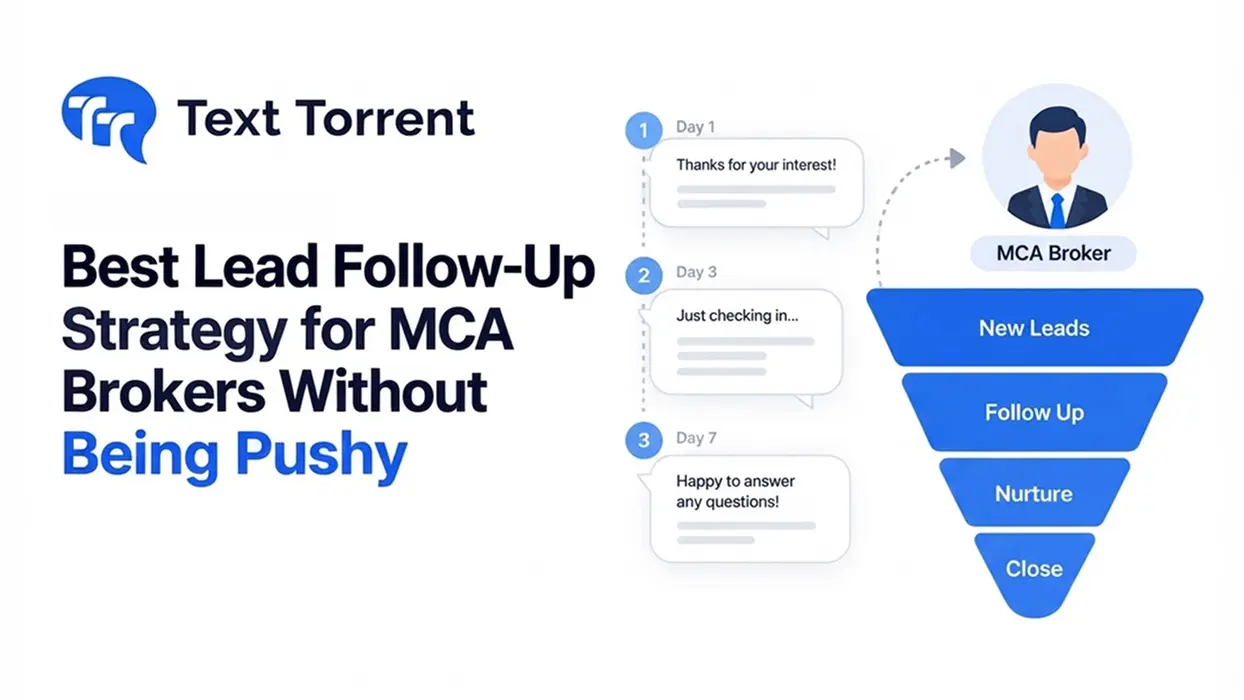
Build communication workflows around customer actions rather than arbitrary schedules.
The goal is usefulness, not frequency.
Measuring What Actually Matters
Many MCA companies focus only on message volume.
This creates misleading reporting.
More important metrics include:
Lead Response Metrics
First response time
Contact rate
Reply rate
Pipeline Metrics
Application completion rate
Document submission rate
Approval rate
Deliverability Metrics
Delivery rate
Complaint rate
Opt-out rate
These measurements reveal whether SMS is improving the sales process.
MCA SMS Marketing Checklist
Before scaling campaigns, verify:
Compliance
Consent documented
Opt-out process active
Messaging disclosures accurate
Deliverability
Delivery rates monitored
Filtering indicators reviewed
Complaint rates tracked
Sales Process
Speed-to-lead automated
Follow-up workflows established
Application reminders configured
Segmentation
Prospects grouped appropriately
Messaging personalized by stage
Response rates measured
Conversion metrics monitored
Funding outcomes tracked
Final Thoughts
SMS marketing can be one of the most effective communication channels available to MCA companies because it supports the areas that matter most: speed-to-lead, applicant engagement, document collection, underwriting communication, and funding coordination.
The companies achieving the strongest results are not necessarily the ones sending the highest volume of messages. They are the organizations using SMS strategically throughout the funding journey while maintaining strong compliance practices, protecting sender reputation, and focusing on customer experience.
When implemented correctly, SMS becomes more than a marketing tool. It becomes an operational advantage that helps MCA companies respond faster, reduce application abandonment, improve communication, and ultimately close more deals.